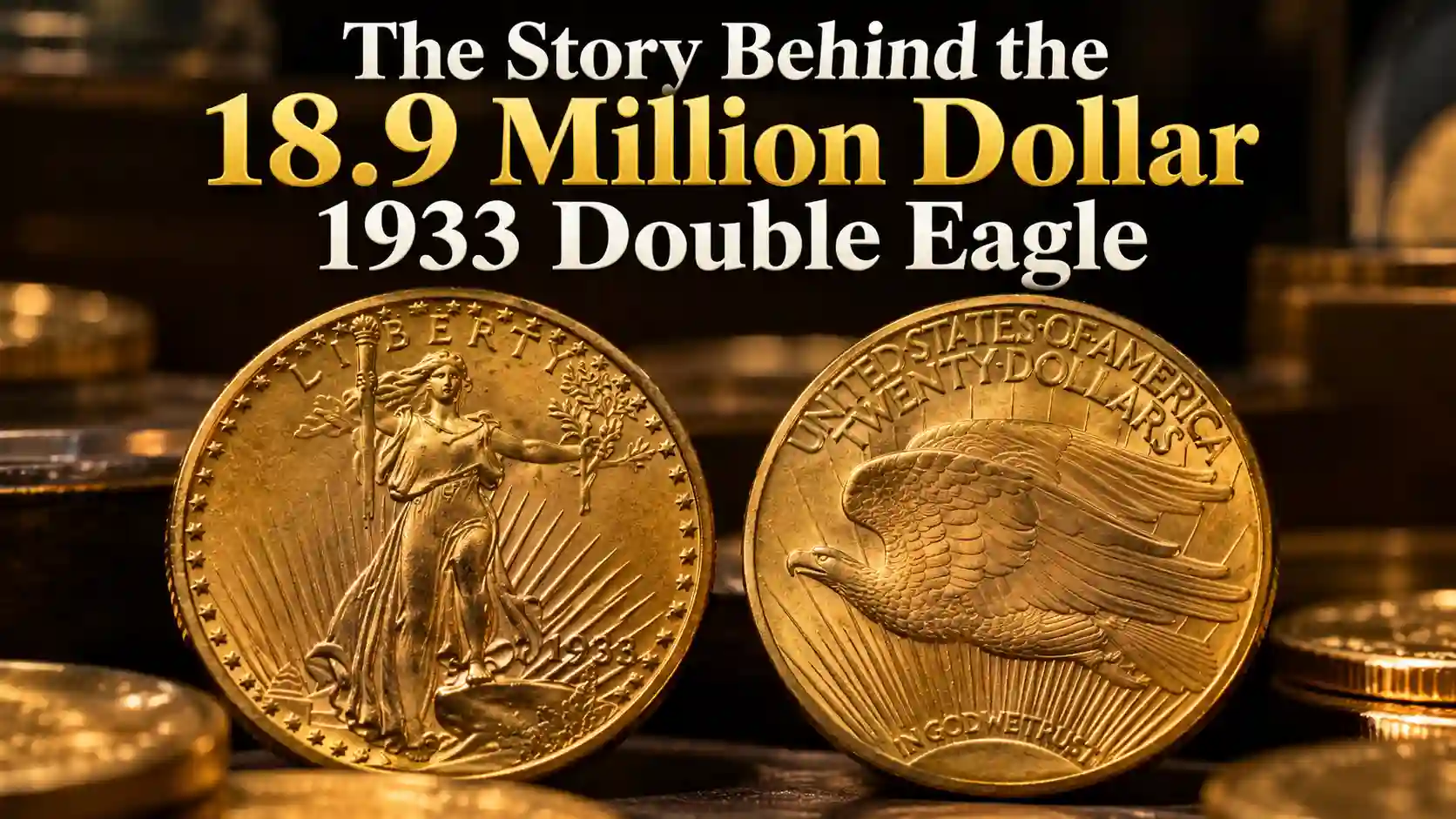
Most people look at old coins for their historical value. But the 1933 Saint-Gaudens Double Eagle is different. It represents a mix of government secrets, theft, and extreme wealth. In 2021, one of these gold coins sold for 18.9 million dollars at a Sotheby’s auction. This sale made it the most expensive coin in the world.
To understand the price, we must look at the year 1933. The United States was suffering from the Great Depression. President Franklin D. Roosevelt wanted to stop citizens from hoarding gold. He signed Executive Order 6102. This order made it illegal for Americans to own significant amounts of gold coins.
The Philadelphia Mint had already minted 445,500 copies of the 1933 Double Eagle. However, because of the new law, none of them were officially issued to the public. The government ordered the entire batch to be melted down into plain gold bars. The Mint workers threw the coins into giant furnaces heated to over 1,900 degrees Fahrenheit.
The Philadelphia Mint Leak
Two coins were intentionally saved and sent to the Smithsonian Institution for preservation. They were supposed to be the only survivors. But a few pieces escaped the melting pot. A Mint cashier named George McCann was later suspected of switching the 1933 coins with older eagles.
McCann allegedly smuggled them out to a local Philadelphia jeweler named Israel Switt. Switt was a well-known coin dealer who kept a network of wealthy buyers. By the 1940s, the Secret Service realized that some 1933 Double Eagles were circulating in the private market. They began a massive domestic hunt. They tracked down and confiscated several coins, destroying them immediately.
The Egyptian Connection
One coin managed to leave American soil legally before the government could stop it. Israel Switt sold it to a Texas dealer, who then sold it to a British firm. Eventually, the coin reached King Farouk of Egypt. He was an eccentric collector who bought almost anything rare.
The Egyptian government actually applied for a U.S. export license for the coin. Due to a bureaucratic mistake in Washington, the license was approved just days before the Secret Service realized the coin was stolen. By then, it was already in Cairo. The U.S. government asked for it back, but the Egyptian revolution happened, and King Farouk was deposed. The coin vanished into the black market for decades.
The Secret Mint Feature
There is a technical detail that many casual collectors miss about this specific batch. The 1933 version has a slightly sharper strike than the 1932 coins. The Mint engravers had subtly modified the die to give the Lady Liberty figure a more three-dimensional look. The edge of the coin also features 46 raised stars, representing the states in the Union at that time.
Additionally, the designer of the coin, Augustus Saint-Gaudens, never lived to see this final version. He passed away years before, and his relationship with President Theodore Roosevelt was the original driving force behind this beautiful design. The 1933 coin is the final, tragic chapter of their shared vision to create the most beautiful currency in the world.
The Legal Loophole
The coin that sold in 2021 is famous because it is the only 1933 Double Eagle that a private citizen can legally own. It resurfaced in 1996 when a British coin dealer named Stephen Fenton was arrested during a sting operation at the Waldorf-Astoria Hotel in New York. The Secret Service seized the coin.
This sparked a five-year legal battle. In the end, a unique settlement was reached. The U.S. Mint agreed to officially “issue” this one specific coin to make it legal currency. In return, the government split the proceeds of its first auction in 2002 with Fenton. The shoe designer Stuart Weitzman bought it then for 7.59 million dollars, kept it for nearly twenty years, and then sold it for the record-breaking 18.9 million dollars in 2021.
The Hidden Langbord Cache
Here is a fact that shows how strict the government remains. In 2003, the family of Israel Switt found ten more 1933 Double Eagles inside an old family safety deposit box. They sent them to the U.S. Mint for authentication.
Instead of authenticating them and giving them back, the government seized them without paying the family a single dime. The family sued the government, and the case went all the way to the appeals court. The government won. The court ruled that because the coins were stolen from the Mint in the 1930s, they always belonged to the public. Those ten coins are now locked away inside the Fort Knox Gold Depository, never to be sold.