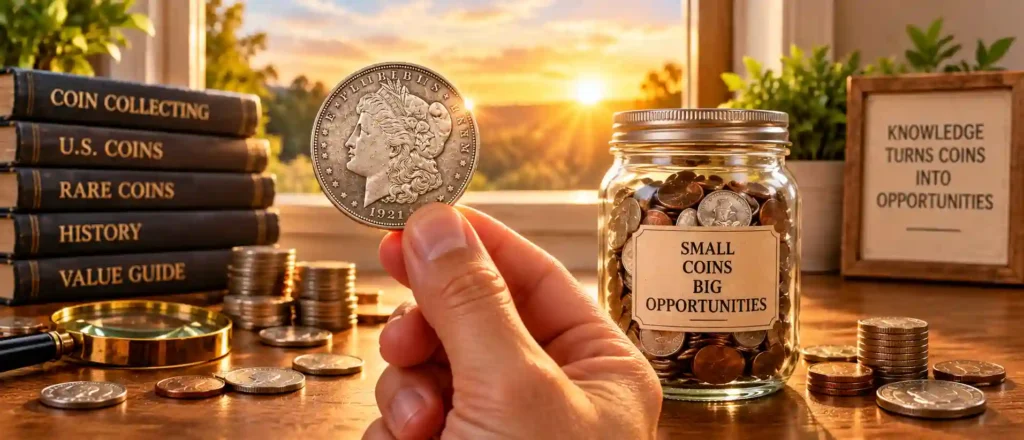
If you have old coins sitting in a box, a jar, or a drawer and you don’t know what to do with them, this guide is for you. We’ll show you exactly where to sell them and how to do it the smart way, step by step.
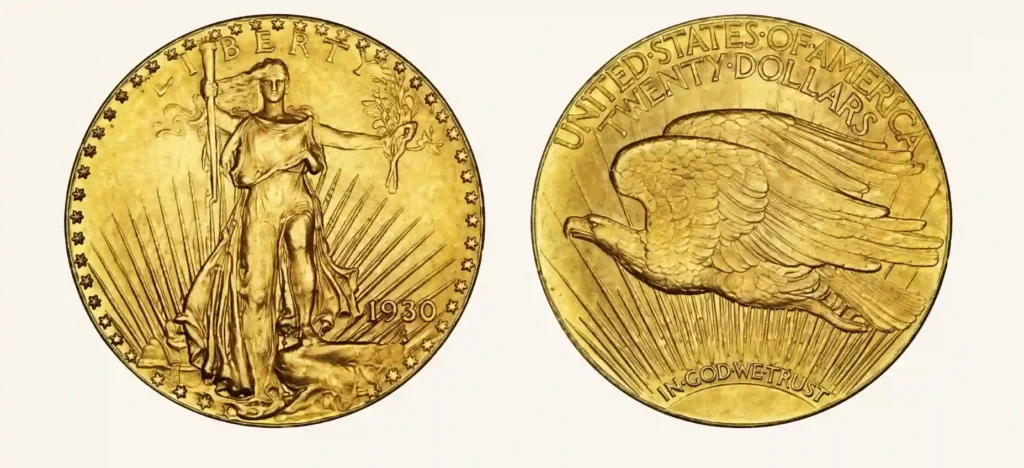
Welcome
If you’re reading this, you probably have a jar, a box, or an old cigar tin full of coins somewhere in your house. Maybe your grandfather left them to you. Maybe you found them while cleaning out a closet. And now you’re stuck with the same question everyone asks. “I have coins. Where do I even sell them?”
That’s exactly what this guide answers. Nothing fancy, no fluff, just the real places you can sell your coins, real phone numbers and emails you can actually use, and the right way to do it so you don’t get ripped off. Let’s get into it.
Step 1: Figure Out What You Actually Have
Before you sell anything, you need to know what’s in your hand. Not every old coin is rare, and not every shiny coin is worthless. Here’s how to sort things out.
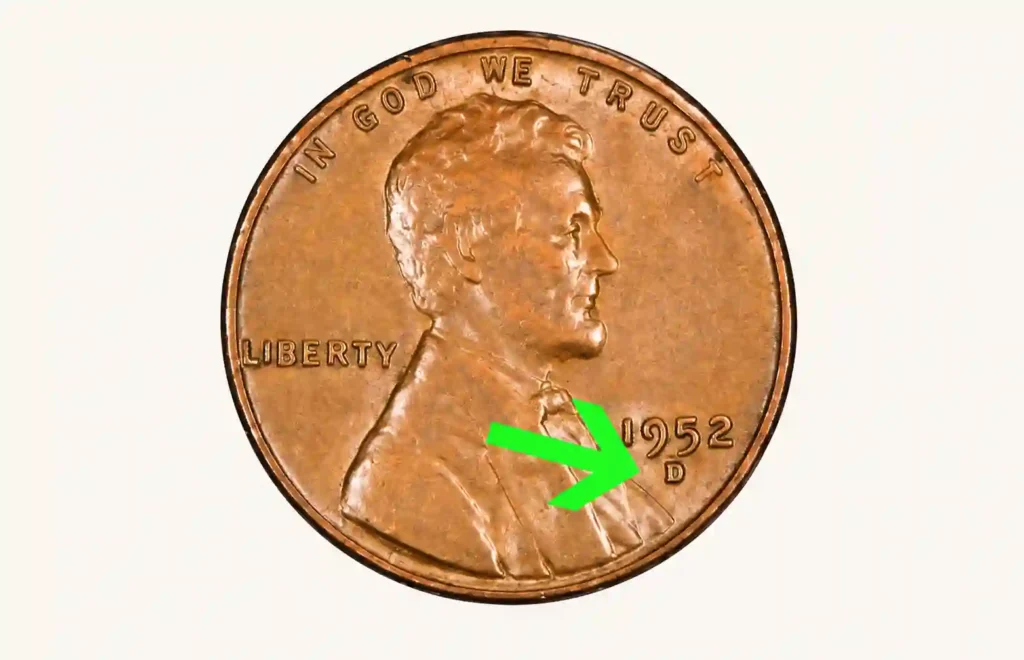
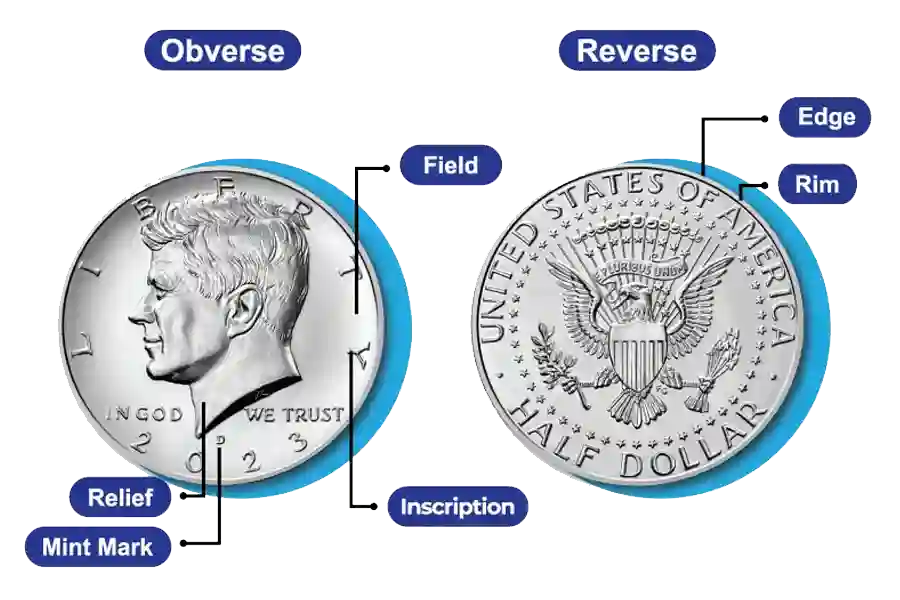
Look at the date and mint mark. The mint mark is a tiny letter, usually a D, S, or P, near the date or on the back of the coin. It tells you where the coin was made, and some mint marks are much rarer than others.
Check the metal. Old US coins like dimes, quarters, and half dollars made before 1965 are 90 percent silver. That alone makes them worth more than their face value, even in rough condition.
Sort into piles. Separate common old coins, like everyday wheat pennies or Jefferson nickels, from anything that looks unusual. Odd dates, errors, or coins in unusually good condition for their age deserve a closer look.
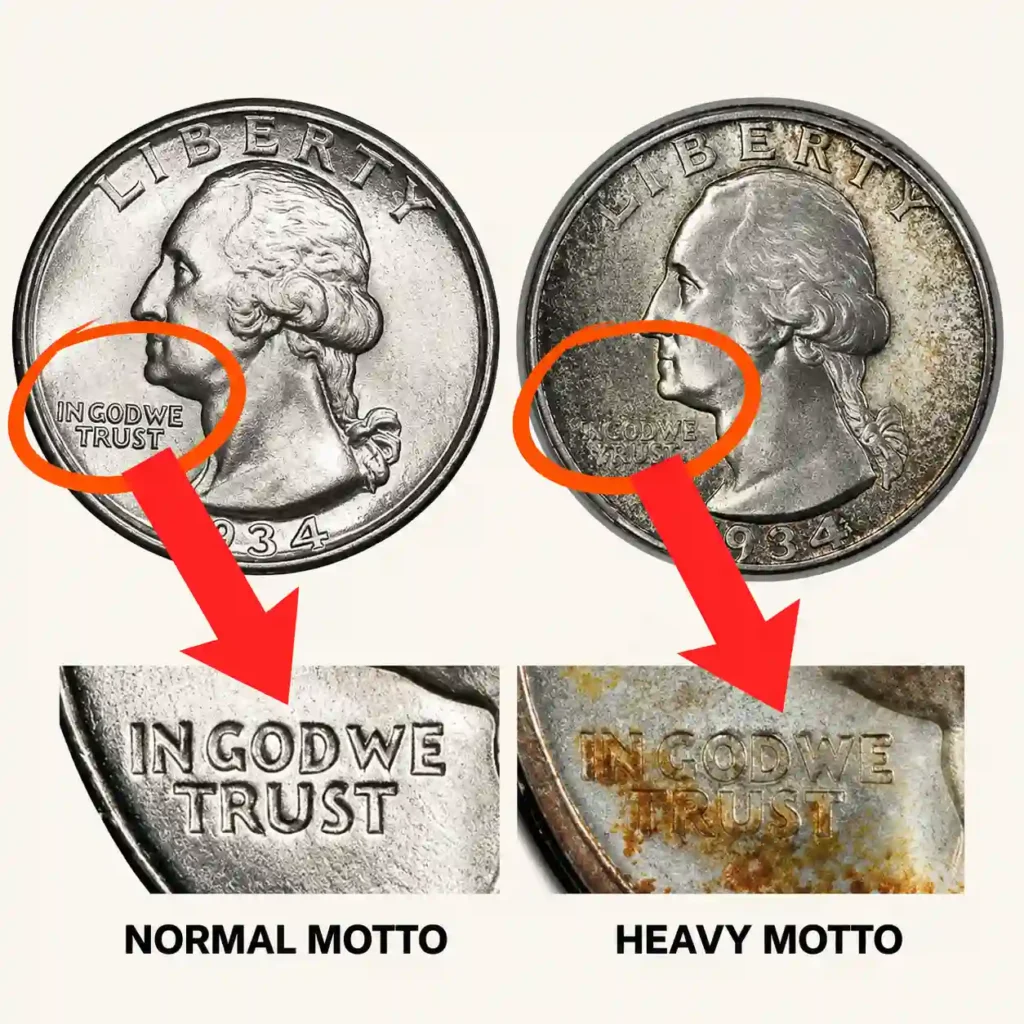
Do not clean your coins. This is important. Cleaning a coin, even gently, can ruin its value. Collectors and dealers can tell right away, and a cleaned coin sells for far less than an uncleaned one.
Step 2: Check If Your Coin Is Actually Worth Something
You do not need to be an expert to get a rough idea of value. Use these free tools first.
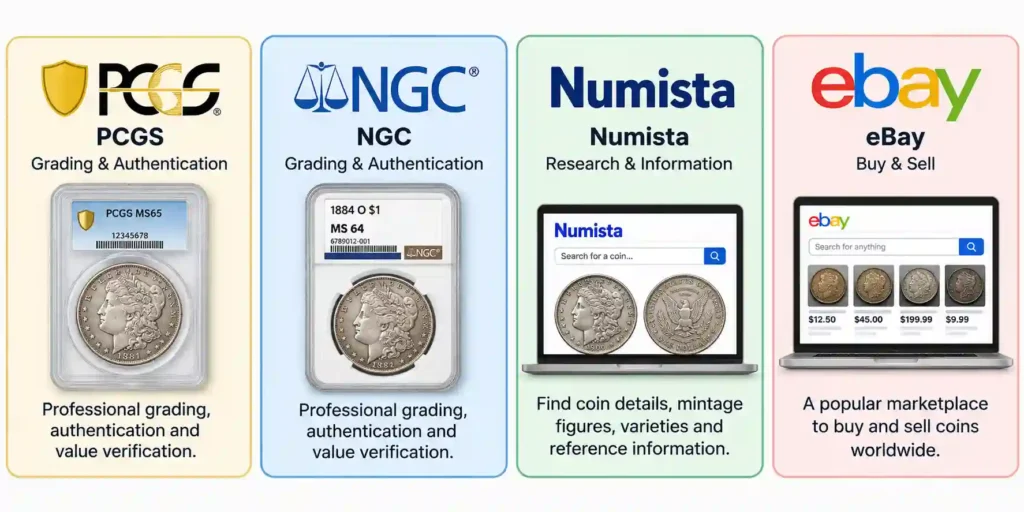
PCGS Price Guide. Go to pcgs.com and search your coin’s type, date, and mint mark to see recent value ranges.
NGC Coin Explorer. Go to ngccoin.com for a similar free tool run by the other major grading company.
Numista.com. Good for identifying coins you cannot recognize, including foreign or very old coins.
eBay sold listings. Search your coin on eBay, then filter for “sold items” only. This shows what people actually paid, not just what sellers are asking.
A quick rule of thumb. If your coin is common, and most old coins are, its value usually comes from the silver or gold inside it, not rarity. If it is genuinely scarce, a low mintage year, an error coin, or a coin in unusually nice shape, that’s when real collector value kicks in.
Step 3: Get Your Coin Professionally Graded (When It Makes Sense)
Grading means sending your coin to a trusted third party company that checks it, proves it’s real, and seals it in a tamper proof holder with an official grade, like MS 65 or AU 58. A graded coin sells for more because buyers trust it.
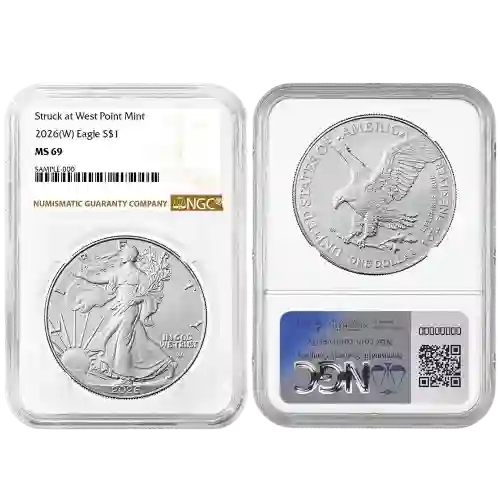
The two most trusted grading companies in the US are PCGS and NGC.
PCGS (Professional Coin Grading Service)
Phone: 800-447-8848
Email: info@pcgs.com
Website: pcgs.com
Hours: Monday to Friday, 7 a.m. to 5 p.m. Pacific Time
NGC (Numismatic Guaranty Company)
Phone: 855-472-3310
Email: service@ngccoin.com
Website: ngccoin.com
Hours: Monday to Friday, 8 a.m. to 7 p.m. Eastern Time
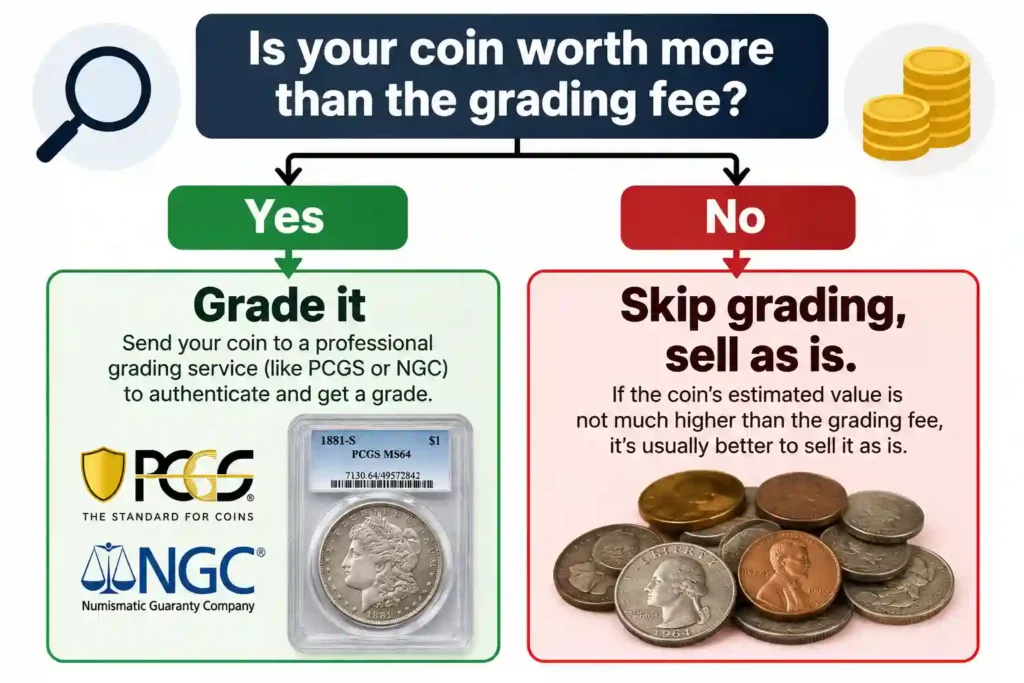
Should you bother grading? Grading costs money, usually somewhere between 20 and 80 dollars per coin depending on the service tier and the coin’s value, plus shipping and insurance both ways. Fees change from time to time, so always check the current price on pcgs.com or ngccoin.com before you send anything in.
Here’s the simple rule. If your coin is worth less than the grading fee, don’t grade it, you’ll lose money. If your coin might be worth several hundred dollars or more, grading is usually worth it, since a certified coin sells faster and for a higher price. If you’re not sure, take it to a local coin dealer first and ask their opinion before spending money on grading.
Step 4: Know Your Selling Options
This is the heart of the guide. Here are the real places people sell coins in the US, explained simply, with real contact details for each one.
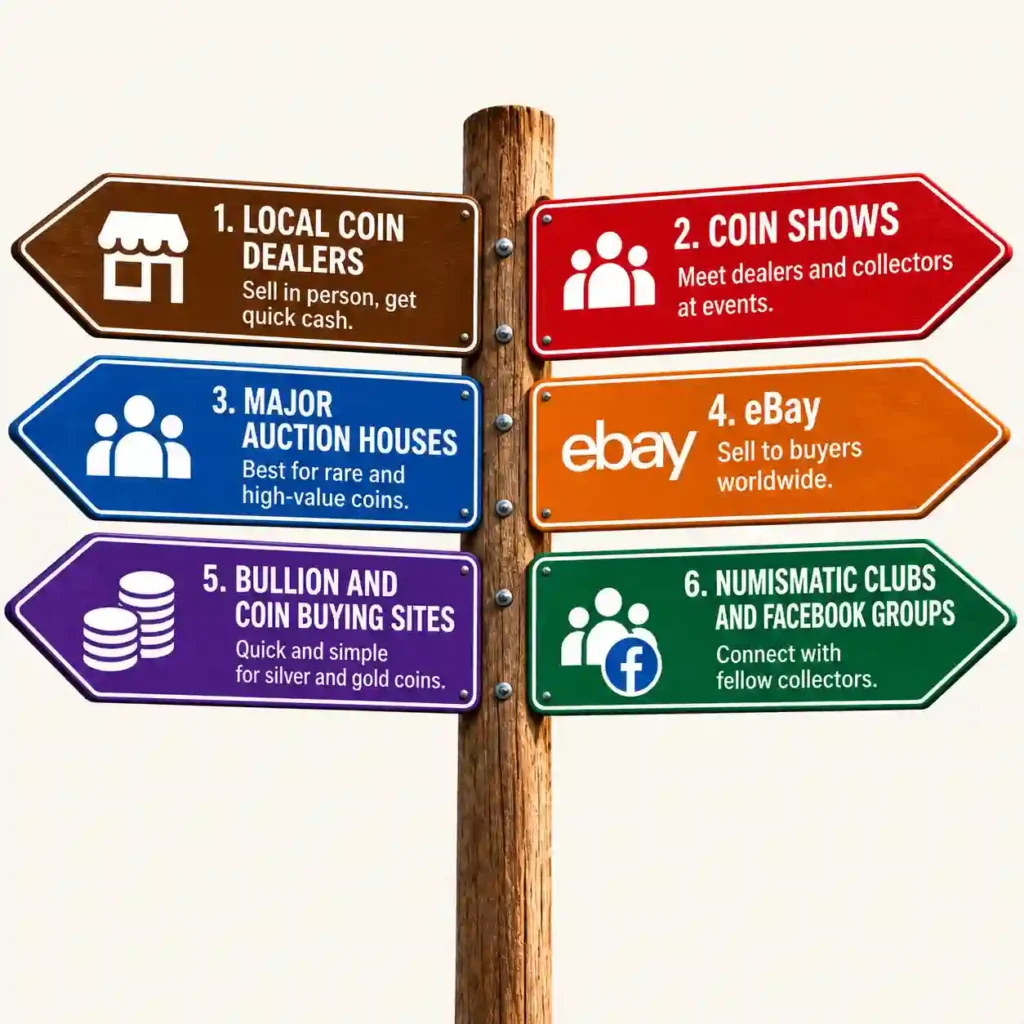
Option 1: Local Coin Dealers
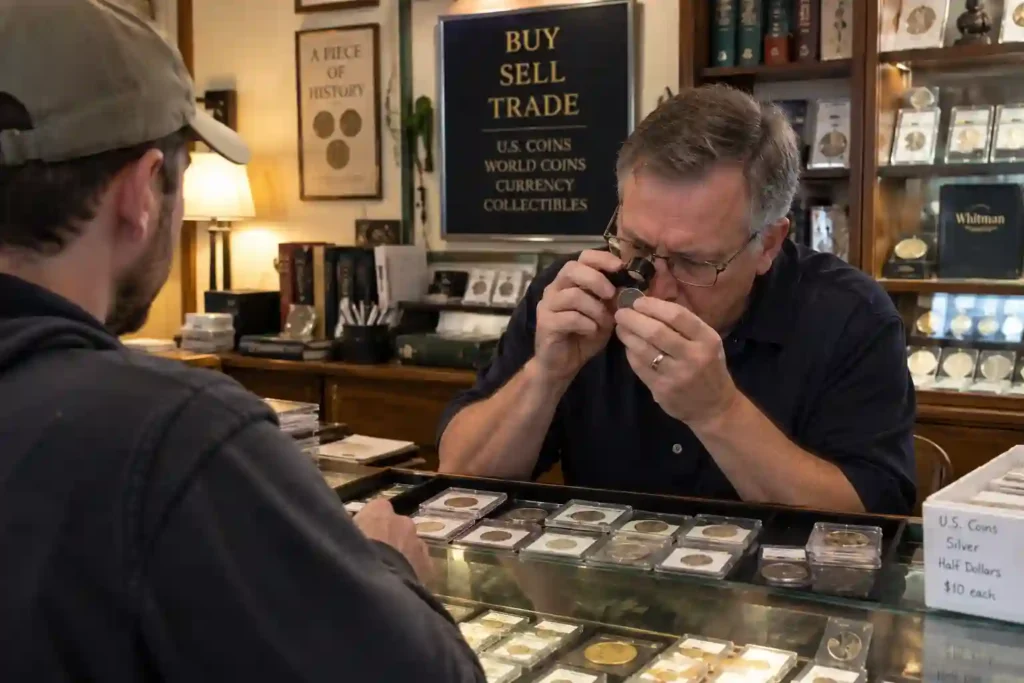
This is the easiest and fastest option. Search for a coin dealer near you, or check a trusted dealer directory so you know you’re dealing with a real, verified business and not a random shop.
American Numismatic Association (ANA)
Phone: 800-367-9723
Email: ana@money.org
Website: money.org
Pros. Instant cash, no shipping risk, you can talk face to face and negotiate.
Cons. Dealers need to make a profit too, so they’ll usually offer 60 to 80 percent of retail value, not full market price.
Option 2: Coin Shows
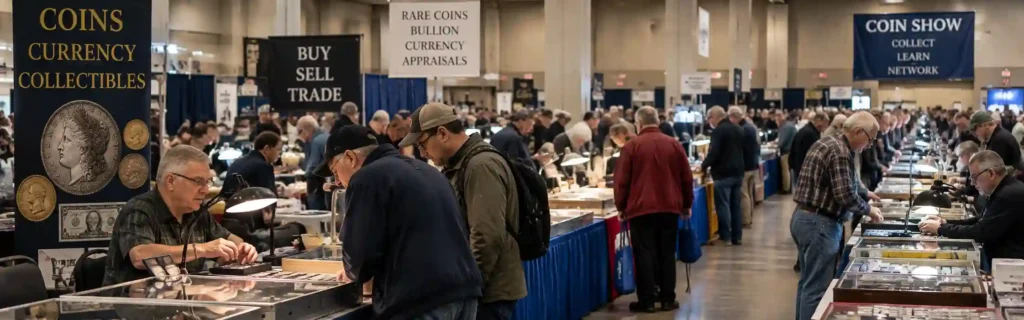
Coin shows are events where dozens of dealers and collectors gather in one place. You can walk around, get multiple offers, and pick the best one.
Pros. Competitive offers, you meet real collectors, great for rare or valuable coins.
Cons. Shows aren’t happening every week in every city, so you may need to travel or wait for one.
Find shows near you through the American Numismatic Association at money.org, or call them at 800-367-9723 and ask what’s coming up in your area.
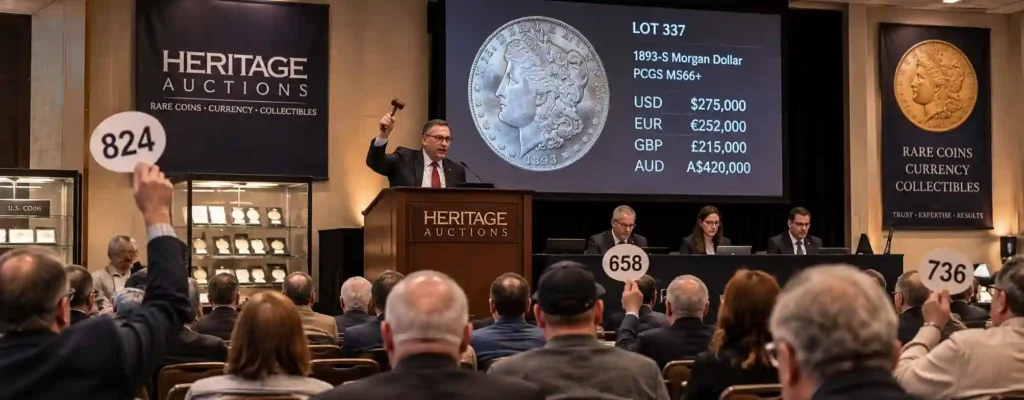
Option 3: Major Auction Houses
For genuinely rare or high value coins, auction houses can get you the best price because serious collectors compete against each other to bid.
Heritage Auctions
Phone: 877-437-4824 (877-HERITAGE)
Dallas office: 214-528-3500
Website: ha.com
Address: 2801 W. Airport Freeway, Dallas, TX 75261
Stack’s Bowers Galleries
West Coast office: 800-458-4646
East Coast (New York) office: 800-566-2580
Email: Consign@StacksBowers.com
Website: stacksbowers.com
GreatCollections
Phone: 800-442-6467
Email: ian@greatcollections.com
Website: greatcollections.com
Address: 17500 Red Hill Avenue, Suite 160, Irvine, CA 92614
Pros. Best prices for rare and valuable coins, reaches serious collectors all over the world.
Cons. They take a seller’s fee, and the exact amount depends on the coin’s value and the auction house, so ask for their current fee schedule before you send anything. It can also take weeks or months to get paid after the auction ends.
Option 4: eBay
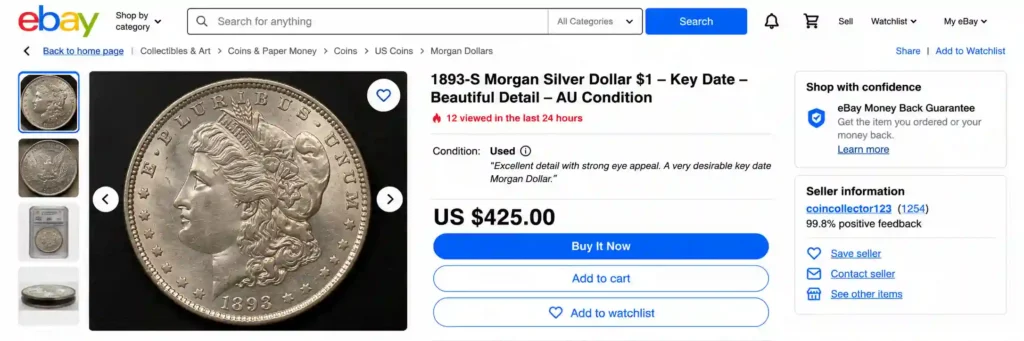
eBay is one of the biggest marketplaces for coins in the US. Millions of collectors browse it every single day, and it works well for both common coins and genuinely rare ones.
Here’s exactly how to sell a coin on eBay, one step at a time.
- Create your account. Go to ebay.com and click “Register.” Set up a seller account with your name, email, and a payment method for receiving money, usually a linked bank account.
- Check your coin’s real value first. Before you list it, search your exact coin on eBay and filter results by “Sold Items” so you know what buyers actually paid recently, not just what other sellers are asking.
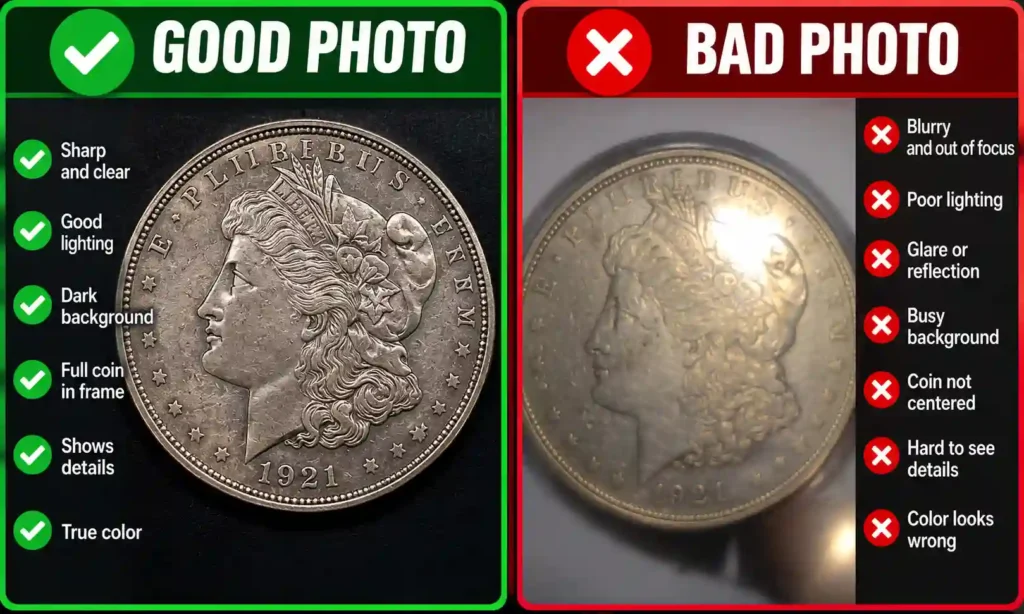
- Take clear photos. Photograph the front and back of the coin in natural daylight, without flash, against a plain dark background. Get close enough that the date and mint mark are easy to read.
- Create the listing. Click “Sell” at the top of the eBay page. Choose “Coins and Paper Money” as the category. Write a clear, honest title, for example “1921 Morgan Silver Dollar, Circulated.” In the description, mention the date, mint mark, condition, and whether it’s graded or raw (ungraded).
- Set your price and format. You can pick a fixed “Buy It Now” price, or let buyers bid in an auction format. For rarer coins, an auction format often brings a higher final price because collectors compete against each other.
- Check eBay’s fees before you list. eBay charges a final value fee, which is a percentage of the total sale price including shipping. This percentage changes from time to time, so check the current rate under eBay’s Seller Fees page so you know exactly how much you’ll keep.
- Ship it safely. Once your coin sells, pack it well in a padded envelope or small box, and always ship with tracking. For anything worth more than about 50 dollars, add insurance too.
Pros. Huge audience, you set your own price, works for common and rare coins alike.
Cons. eBay and payment processing both charge fees, so factor that into your price. You’re also in charge of packaging, shipping, and answering buyer questions yourself.
Option 5: Bullion and Coin Buying Websites
If you have common silver or gold coins, like pre 1965 silver dimes, quarters, or Morgan silver dollars, and you just want quick cash without haggling, bullion dealers buy coins directly based on the current metal price.
APMEX
General phone: 800-375-9006
Selling department phone: 800-514-6318
Website: apmex.com
Note. APMEX usually has a minimum purchase amount of around 1,000 dollars when they’re buying from you, so this option works best if you have a decent amount of silver or gold coins, not just one or two.
Pros. Fast, simple, no listing or waiting around.
Cons. You’ll usually get closer to melt value instead of collector value, so this is best for common coins, not rare ones.
Option 6: Numismatic Clubs and Facebook Groups
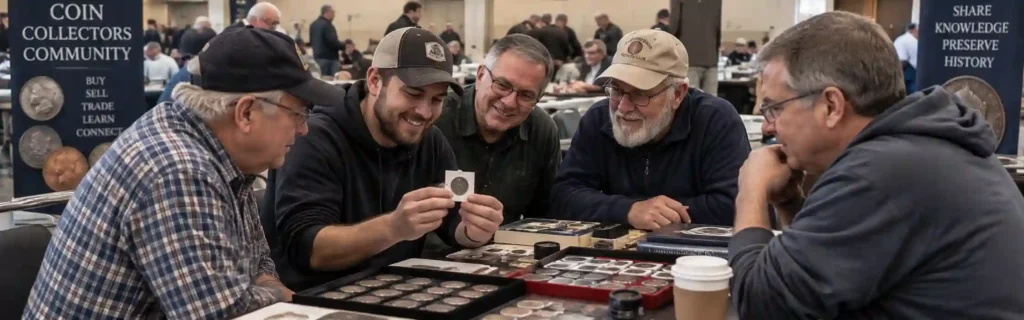
Local coin clubs and online numismatic Facebook groups are full of real collectors looking for specific coins.
Pros. Direct connection with buyers who actually want what you have, often fair prices since both sides know coins.
Cons. Takes more time and effort to build trust and find the right buyer.
You can find local clubs through the American Numismatic Association at money.org or by calling 800-367-9723.
Step 5: How to Actually Sell, the Full Process
Follow these steps in order.
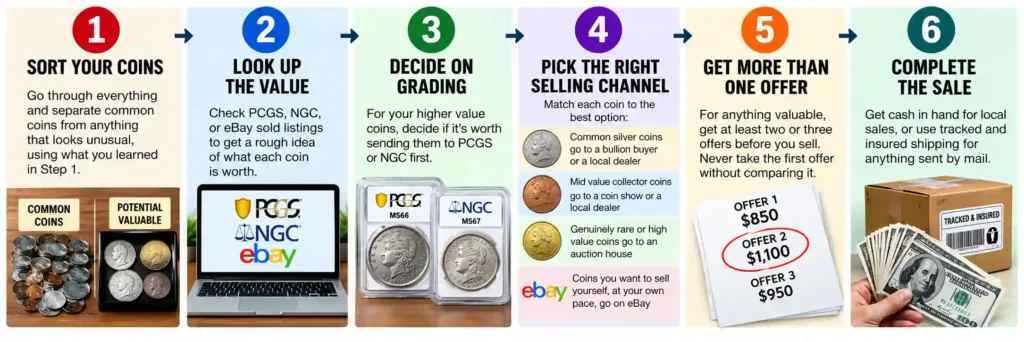
- Sort your coins. Go through everything and separate common coins from anything that looks unusual, using what you learned in Step 1.
- Look up the value. Check PCGS, NGC, or eBay sold listings to get a rough idea of what each coin is worth.
- Decide on grading. For your higher value coins, decide if it’s worth sending them to PCGS or NGC first.
- Pick the right selling channel. Match each coin to the best option:
- Common silver coins go to a bullion buyer or a local dealer
- Mid value collector coins go to a coin show or a local dealer
- Genuinely rare or high value coins go to an auction house
- Coins you want to sell yourself, at your own pace, go on eBay
- Get more than one offer. For anything valuable, get at least two or three offers before you sell. Never take the first offer without comparing it.
- Complete the sale. Get cash in hand for local sales, or use tracked and insured shipping for anything sent by mail.
Step 6: How to Avoid Getting Scammed
This is the part most guides skip, but it’s the most important one. Follow these rules every time.
- Never send coins to a stranger first without payment. Only send coins after payment clears, or use a trusted platform like eBay or an in person meeting.
- Watch out for low ball “we buy gold” offers. Random mail in flyers or late night TV ads often pay far below what your coins are really worth.
- Always ship with tracking and insurance. Never mail valuable coins in a plain envelope with no tracking.
- Watch for the “overpayment” scam. If a buyer sends more money than agreed and asks you to refund the difference, stop right there. This is a classic scam. Their payment bounces later, and you lose both the coin and the money.
- Meet in a public place. If you’re selling in person, pick a busy public spot. Many local police stations even offer safe meeting spots just for this reason.
- Get a second opinion. If a dealer’s offer feels too low compared to what you researched, ask another dealer before you decide.
Step 7: Simple Tips for Photographing and Listing Your Coins
If you’re selling online, good photos make a huge difference. Follow these tips.
- Use natural daylight, not flash. Shoot near a window during the day. Flash creates glare on coins and hides details.
- Photograph both sides. Always show the front (obverse) and the back (reverse).
- Use a plain, dark background. This makes the coin stand out clearly in the photo.
- Get close enough to read the details. The date and mint mark should be sharp and easy to read in the photo.
- Be honest about the condition. Mention scratches, wear, or damage in your listing. Collectors notice anyway, and honesty builds trust and repeat buyers.
Step 8: Simple Negotiation Tips
Use these tips whenever you’re talking to a buyer or a dealer.
- Know your coin’s value first. Never walk into a conversation without already knowing roughly what your coin is worth.
- Ask for a better offer. If the first offer feels low, simply ask, “Is that your best offer?” It often opens the door to a better number.
- Don’t feel rushed. It’s completely fine to say “let me think about it” and come back later. You never have to decide on the spot.
- Be patient with valuable coins. The right buyer at an auction or a coin show will often pay more than a quick, easy local sale.
Quick Reference Cheat Sheet
| Type of Coin | Best Place to Sell | Contact |
|---|---|---|
| Common old coins or junk silver | Bullion buyer, local dealer | APMEX, 800-375-9006 |
| Mid value collector coins | Local dealer, coin show | ANA, 800-367-9723 |
| Rare or high value coins | Auction house | Heritage, 877-437-4824. Stack’s Bowers, 800-458-4646. GreatCollections, 800-442-6467 |
| Want to sell it yourself, at your own pace | eBay | ebay.com |
| Want a fair collector to collector deal | Numismatic club, Facebook coin groups | Through ANA, money.org |
| Want your coin professionally graded first | PCGS or NGC | PCGS, 800-447-8848. NGC, 855-472-3310 |
Conclusion
Selling coins doesn’t have to be confusing or scary. Once you know what you have, roughly what it’s worth, and which door to walk through, dealer, coin show, auction house, eBay, or a bullion buyer, the rest is just following the steps. Take your time, get more than one opinion, use the phone numbers and emails in this guide to reach out directly, and never feel rushed into a sale.
Good luck, and here’s to turning that old coin jar into real cash.