Find 1936 Buffalo nickel value by mint mark, condition, proof finish, and the rare 3½ Legs variety.
Could a five-cent coin dated 1936 be worth more than a few dollars? Most circulated 1936 Buffalo nickels are affordable, but uncirculated coins, proofs, and a scarce Denver variety can bring much stronger prices. This guide explains the mint issues, gives value ranges by grade, and shows you what to inspect before buying or selling.
A quick overview of the 1936 Buffalo nickel
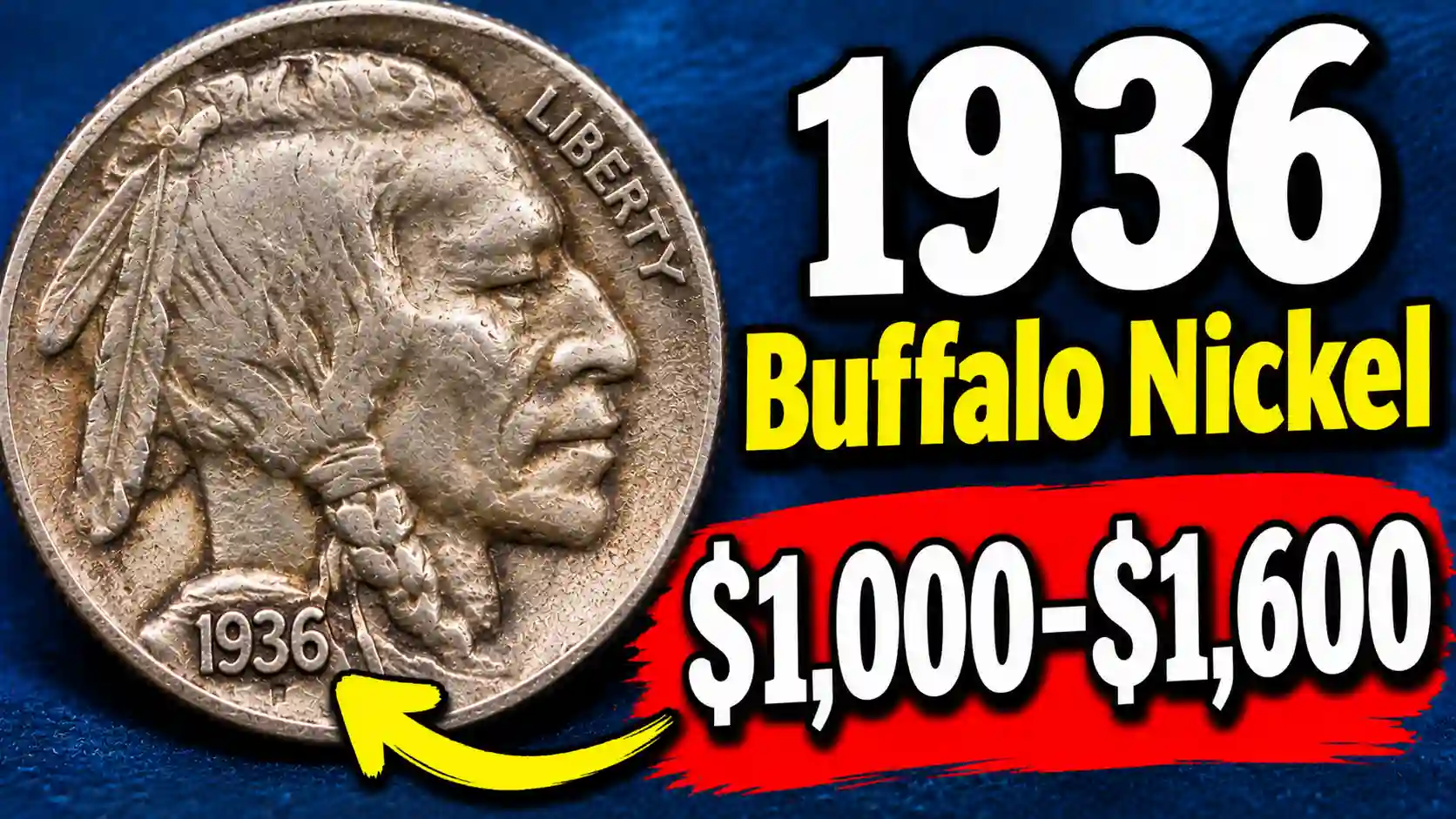
Designed by James Earle Fraser, the Buffalo nickel shows a Native American portrait on the front and an American bison on the reverse. It is 75% copper and 25% nickel, weighs 5 grams, measures 21.2 millimeters, and has a plain edge. In 1936, Philadelphia struck 118,997,000 coins, Denver made 24,814,000, and San Francisco produced 14,930,000. Philadelphia coins have no mint mark; D and S identify Denver and San Francisco.
Philadelphia also struck 4,420 proof nickels for collectors. Their specially prepared surfaces distinguish them from regular circulation strikes. Identifying the mint and strike type is the first step in estimating value.
How much is a 1936 Buffalo nickel worth?
Most circulated examples are worth a few dollars, while sharper uncirculated coins bring more. These are broad retail estimates for problem-free coins; grade, strike, eye appeal, and market demand affect the price.
| 1936 issue | Circulated | About Uncirculated | Mint State / Proof |
|---|---|---|---|
| Philadelphia, regular | $1–$7 | $8–$20 | MS63 $30–$65; MS65 $75–$185 |
| Denver, regular | $1–$9 | $10–$30 | MS63 $40–$75; MS65 $95–$175 |
| San Francisco, regular | $1–$8 | $10–$30 | MS63 $40–$70; MS65 $100–$185 |
| Philadelphia proof | — | — | PR63–PR65 about $1,000–$1,600 |
The 1936-D 3½ Legs variety is not included; it can be worth hundreds or thousands depending on authentication and grade. Use this price guide as a starting point, not a guaranteed selling price.
How to check your 1936 Buffalo nickel value at home
Find the mint mark on the reverse below FIVE CENTS. D means Denver, S means San Francisco, and no mark means Philadelphia. Use a magnifier to inspect the date, lettering, and bison’s legs, but don’t mistake ordinary wear or a weak strike for an error.
Condition changes value. On the front, inspect the date, cheek, and hair detail; on the reverse, look at the horn, shoulder, and leg outlines. A complete horn is useful when judging detail. Coins with no wear are Mint State, while visible wear on raised areas indicates circulation.
Which 1936 Buffalo nickels are worth the most?
The best-known variety is the 1936-D 3½ Legs nickel. Over-polishing a reverse die removed part of the bison’s front leg, leaving a faint or shortened outline. It must have the Denver D mint mark, and genuine examples should match recognized die markers; an ordinary weak strike is not the variety.
The 1936 Philadelphia issue also has doubled-die varieties, while Denver and San Francisco have repunched mint-mark varieties. Proof coins can bring premiums, especially with clean fields and strong contrast. Have a suspected variety professionally attributed before pricing it.
How much a 1936 Buffalo nickel has sold for
Ordinary circulated 1936 nickels commonly sell for a few dollars, while AU pieces may reach roughly $10–$30. Certified Mint State examples can bring tens or hundreds, and exceptional top-grade coins have sold for thousands. A Philadelphia 1936 nickel graded MS68 sold for $31,500 at public auction, showing how much condition can matter.
The 1936-D 3½ Legs variety commands much more. Certified examples have sold for several thousand dollars in circulated grades, with high-grade pieces bringing more. Compare completed sales for the same variety and grade; a top auction result isn’t a realistic estimate for an ordinary coin.
Things to know before you sell a 1936 Buffalo nickel
Don’t clean or polish the coin. Rubbing can leave scratches and reduce collector value, even when the nickel looks brighter. Hold it by the edge and store it in a coin-safe holder. For a possible 3½ Legs variety, proof, or unusually sharp Mint State coin, consider professional grading or an independent appraisal.
Check for an altered date, added mint mark, or changes to the bison’s leg before accepting a high valuation. Get more than one dealer offer and compare them with completed sales. A dealer’s purchase price is usually below retail guide value.
Where and how to sell a 1936 Buffalo nickel if you have one
A local coin shop can inspect an ordinary example and make an offer. An auction house may suit a certified 3½ Legs variety, high-grade proof, or top-condition business strike. Online marketplaces can work for common coins; use clear photos, an honest description, secure packaging, and tracked shipping.
Read this guide to how to sell your coins before choosing a buyer. Keep records of appraisals, offers, fees, and shipping terms.
Frequently Asked Questions
Is a 1936 Buffalo nickel rare?
No. Regular issues had large mintages and are generally common, although high-grade examples are more desirable.
What is a 1936 Buffalo nickel worth without a mint mark?
It was made in Philadelphia. Circulated examples are usually worth a few dollars; uncirculated coins can bring more.
Where is the mint mark on a 1936 Buffalo nickel?
Look below FIVE CENTS on the reverse. D means Denver and S means San Francisco.
What is the 1936-D 3½ Legs Buffalo nickel?
It is a scarce Denver variety where die polishing removed part of the bison’s front leg. Authentication is essential.
Is a 1936 Buffalo nickel made of silver?
No. It contains 75% copper and 25% nickel and weighs 5 grams.
Is a 1936 proof Buffalo nickel valuable?
Yes. Philadelphia struck only 4,420 proofs, and value depends on finish, grade, and surface quality.