Check 1890 Indian Head penny values by grade, identify the Philadelphia issue, and learn how condition and varieties affect its price.
An 1890 Indian Head penny can be worth more than one cent, but most examples remain affordable collector coins. Condition and the color left in the copper make the biggest difference. This guide gives practical value ranges, explains how to identify the Philadelphia issue, points out a collectible die variety, and shows how to inspect or sell your coin before making a decision.
What is an 1890 Indian Head Penny worth right now?
Most circulated 1890 Indian Head pennies are worth about $2 to $25. Uncirculated coins can bring much more, especially when they retain original red color or show a recognized variety; actual value depends on grade and the market.
| Grade or condition | Approximate value |
|---|---|
| Good-4 to Very Good-8 | $2–$8 |
| Fine-12 to Very Fine-20 | $5–$15 |
| Extremely Fine-40 to About Uncirculated-50 | $15–$45 |
| MS60–MS63, brown | $30–$175 |
| MS64–MS65, brown or red-brown | $100–$500 |
| MS65, original red | About $800–$4,000 |
| MS66 and higher, original red | Several thousand dollars; exceptional pieces can exceed $8,000 |
Treat these as estimates; surface problems can lower the price. Proof examples made for collectors have a separate value range.
How can you identify an 1890 Indian Head penny?
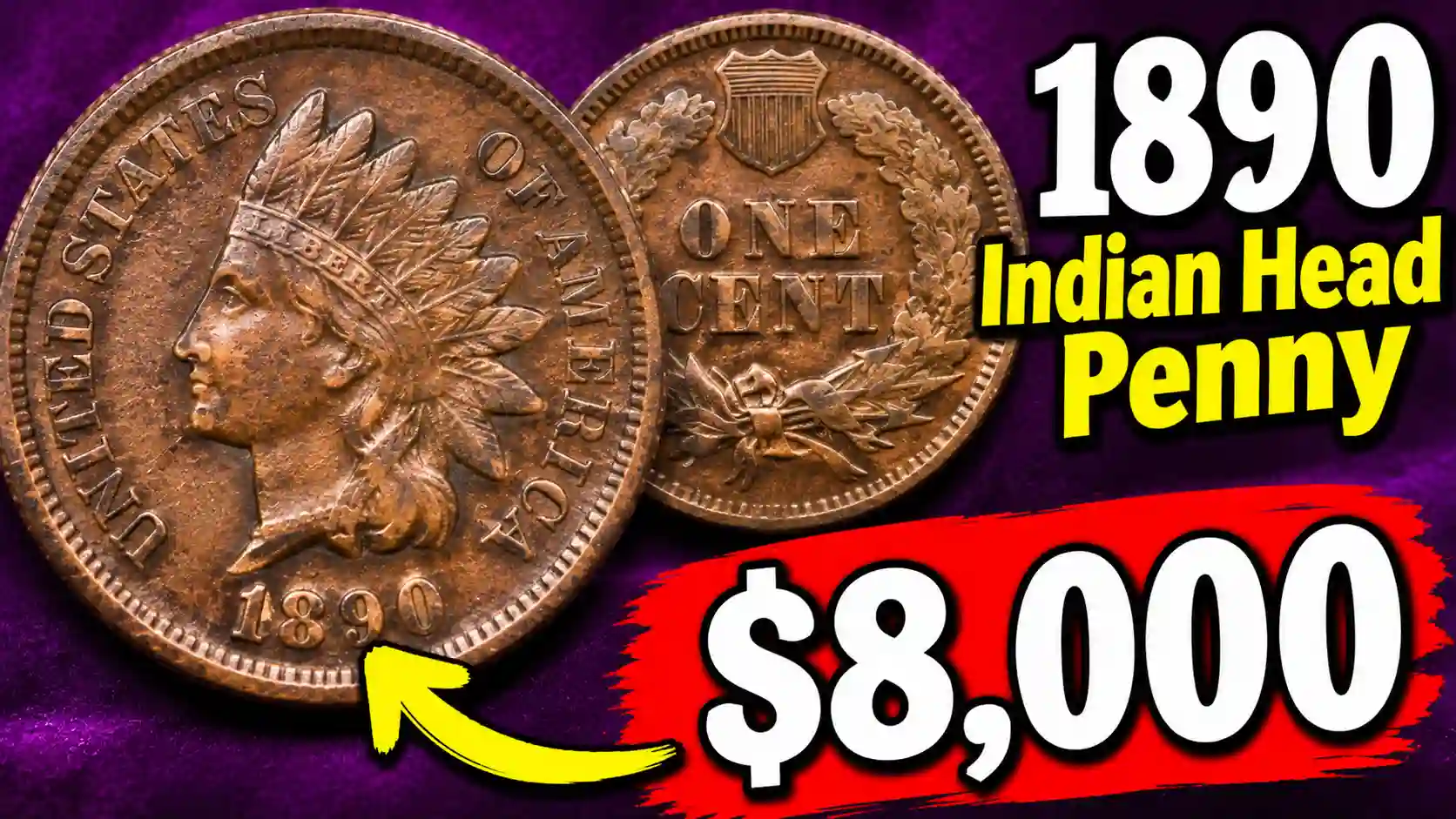
Liberty wears a feathered headdress on the front, with 1890 below and UNITED STATES OF AMERICA around the rim. The back shows ONE CENT inside an oak wreath topped by a shield. James B. Longacre designed the series; 1890 cents came only from Philadelphia.
It has no mint mark, so don’t look for a P, D, or S. The bronze cent weighs about 3.11 grams, measures 19 millimeters, and contains 95% copper with tin and zinc.
What makes one 1890 Indian Head penny worth more than another?
Grade is the first factor. Wear shows on Liberty’s cheek, feathers, and headband, as well as the reverse wreath and shield. Sharp details, few marks, and original mint luster raise the value.
Color matters on uncirculated cents. Brown (BN) coins are mostly brown, red-brown (RB) coins retain some red, and red (RD) coins preserve much more original color. The 1890 also has recognized die varieties, including the Snow-1 / FS-101 quadrupled-die obverse. A specialist should confirm the attribution before you count on a variety premium.
How do you check your 1890 Indian Head penny value at home?
- Find the date. Confirm that all four digits read 1890.
- Check the mint mark. A regular 1890 cent has none because it was made in Philadelphia.
- Inspect the design. Look for Liberty’s headdress and the wreath-and-shield reverse.
- Judge the wear. Check the headband, cheek, feathers, leaves, and shield for flattened details.
- Consider grading. Compare your coin with certified examples; professional grading is most useful for apparent uncirculated coins, strong red color, or possible varieties.
Use indirect light and hold the cent by its edge. Never rub or polish it.
What have 1890 Indian Head pennies actually sold for?
Auction archives show brown 1890 cents selling from about $6 to nearly $600 across grades and varieties. That isn’t a typical price for an ordinary circulated coin: common examples bring single digits or low tens, while sharper pieces can reach several dozen dollars.
Red mint-state coins sell for more. Recent MS65 red examples brought about $840 to $3,960, while MS66 red examples reached roughly $4,200 to $8,400. These are exceptional coins; grade, color, variety, and eye appeal all matter.
What mistakes can lower your coin’s value before you sell?
Cleaning is a common mistake. Scrubbing, dipping, polishing, or using household products can leave hairlines and unnatural color, reducing collector appeal. Store the cent in a non-PVC holder, keep it dry, and touch only the edge.
Don’t assume every 1890 penny is rare or every odd mark is an error. Ask a reputable dealer or grading service about a questionable date or variety. Knowing the grade and color helps you avoid a low offer.
How and where can you sell an 1890 Indian Head penny for a fair price?
A local coin shop offers a quick assessment; compare offers and ask how the price was set. A specialist auction may suit a certified red coin or authenticated variety, though fees apply. Online marketplaces work for common coins when photos and descriptions are clear.
Get another opinion on a high-value offer, and use insured, tracked shipping. Review the fees and this guide to how to sell your coins before choosing a selling method.
Frequently Asked Questions
Is an 1890 Indian Head penny rare?
No. About 57.18 million were struck. High-grade red coins and recognized varieties are scarcer.
Does an 1890 Indian Head penny have a mint mark?
No. Regular 1890 Indian Head cents were made at Philadelphia and carry no mint mark.
What is an 1890 Indian Head penny made of?
It contains 95% copper and 5% tin and zinc combined, and weighs about 3.11 grams.
What is the rarest 1890 Indian Head penny variety?
The Snow-1 / FS-101 quadrupled-die obverse is a notable scarce variety. Have the details authenticated before valuing it.
Should I get my 1890 penny professionally graded?
Consider it for uncirculated coins, strong original red color, or a possible variety. A worn common example may not justify the fee.
Can I clean my 1890 Indian Head penny before selling it?
No. Cleaning can leave permanent marks or change the copper color, lowering its appeal to collectors.