In this article, we are going over the $20 bill you should never cash in. Check the 8-digit serial. We’ve got some really cool ones today, guys. Let’s hop right into it with this first one from 2017.
A 2017 $20 Bill with a Fancy Low Serial Number
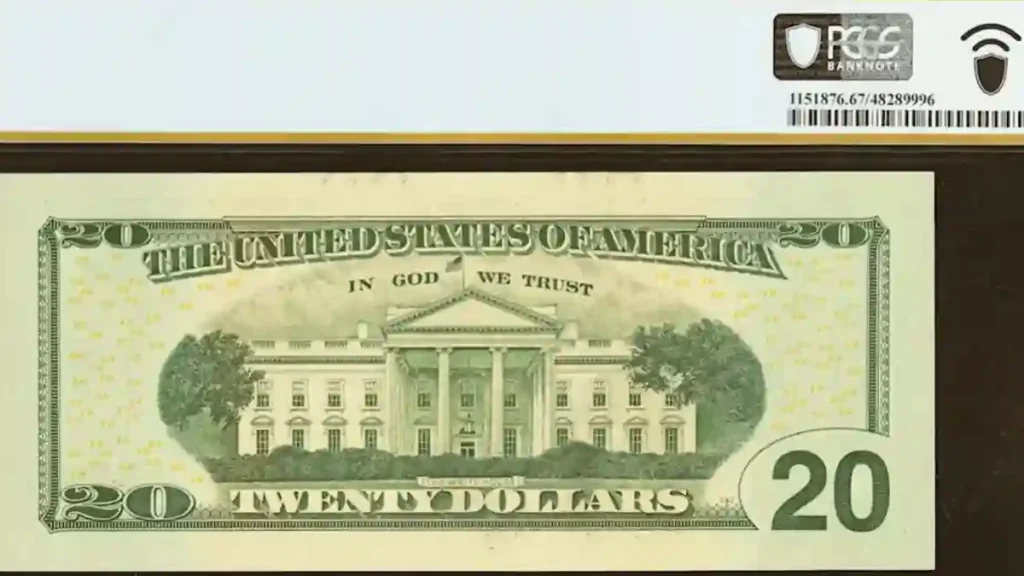
It’s a $20 bill graded by PCGS Bank Note at a 67 PPQ. Looking right at that serial number, you’ve got a 0 0 0 followed by three number fours. So, some people would call this a fancy low serial number because we’ve got three digits. I like that it’s a low serial number that also has the same number ending three times.
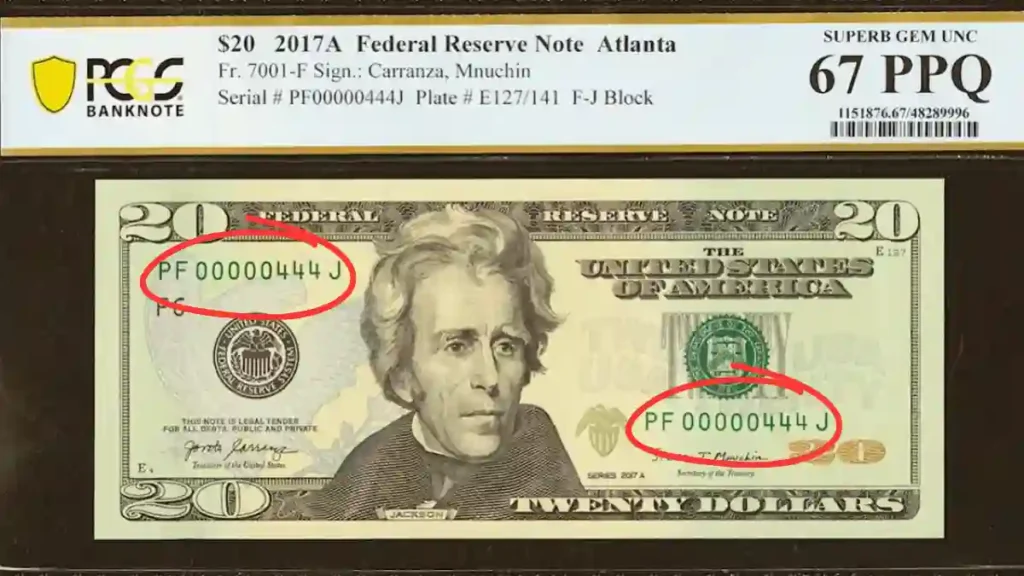
This is definitely the type of bill that you could show off to a friend or family member and be like, “Hey, check out this $20 bill that I have in my collection. It’s got a bunch of zeros and a couple fours at the end.”
Definitely a cool one there. It sold for $164.70.
A $20 Bill with a Radar Serial Number
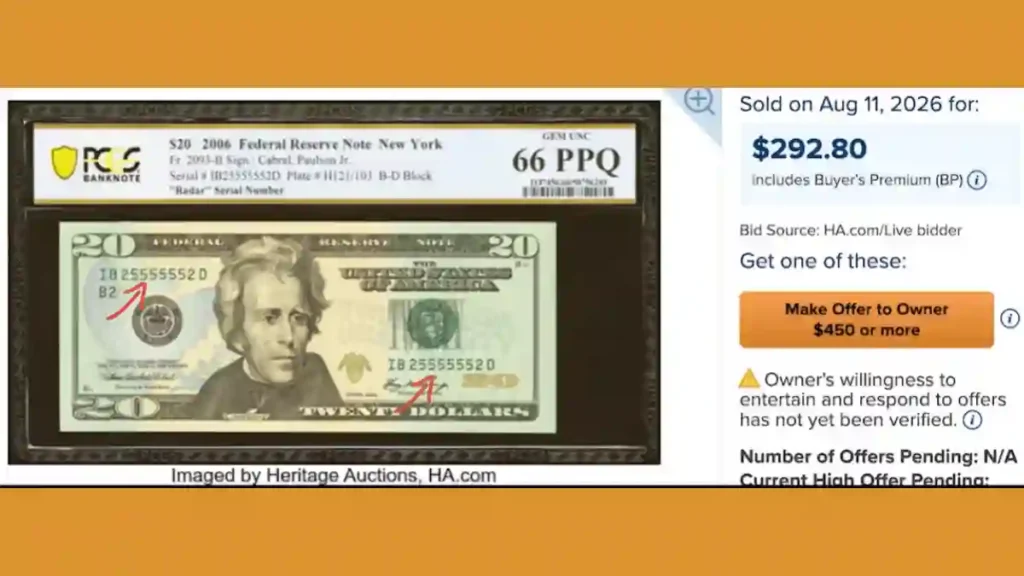
This next example is considered to be a radar serial number. Radar essentially means if you start at the beginning to 55 five55 all the way at the end ending with a two, it reads the same way from the front to the back starting with two with a bunch of fives in between. This example sold for $292.80.
Another Radar Serial Number – 44400444
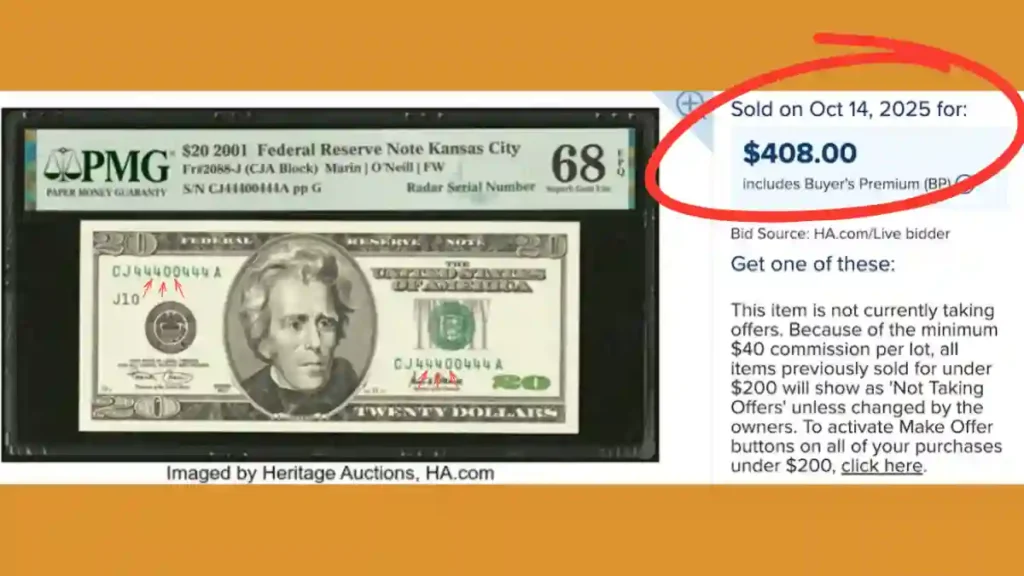
Here we have another radar except this one has a bit of a cooler look to it. It’s got 44400444.
It also is a 2001 $20 bill graded by PMG at a 68. It sold for $48.00
A Really Sought-After $20 Bill with All Threes
Up next, we have a really sought-after $20 bill. It is from the year 2013. It was created by PMG at a choice very fine 35, which means there’s actually quite a few folds on this bill.
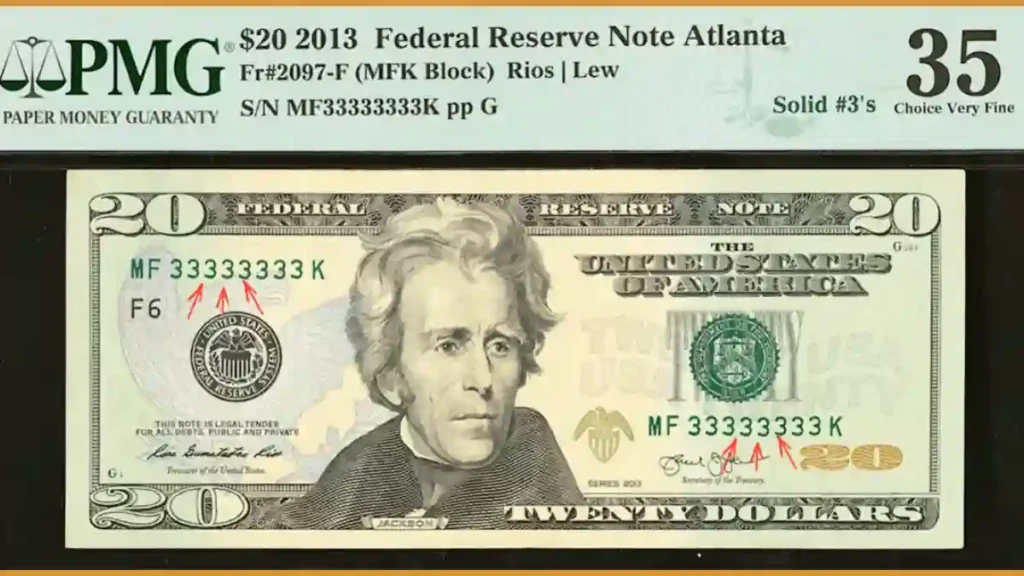
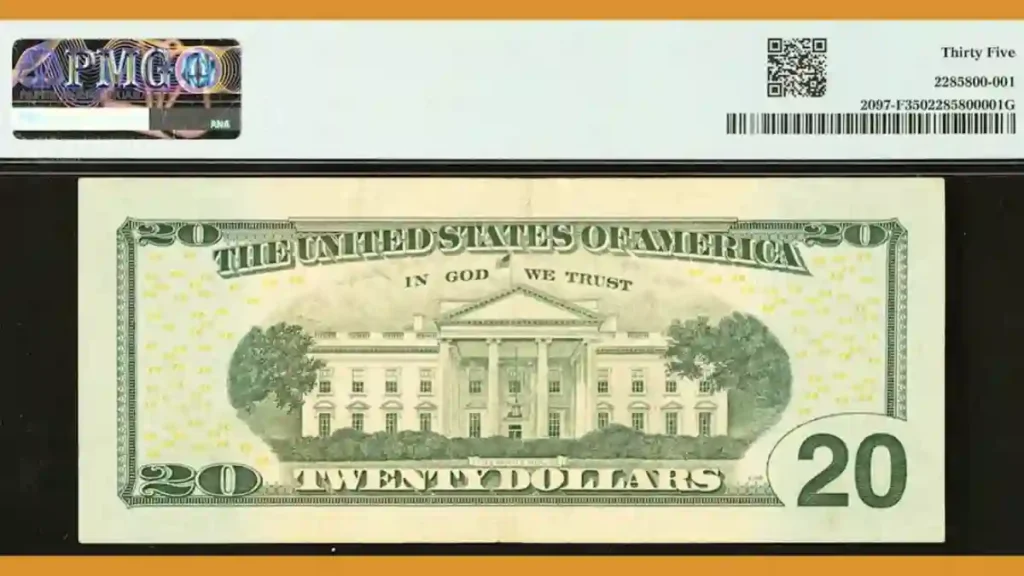
This is something that collectors will pay a little less for because the grade is not as high as it could be. This example still sold for $960 because this is a solid number three serial number. you’ve got a bunch of threes only on your $20 bill.
Now, keep in mind, please be very careful if you end up buying a $20 bill like this with a bunch of threes. You’re going to want to make sure that it is a graded example.
I say that because there are some bad actors out there that will deface US federal currency, which by the way is against the law. You don’t want to be messing with any sort of US currency at all. but they would change the serial number on the bill to make it look like a fancy serial number and increase the value of the note.
That is why these third-party grading companies like PCGS, like PMG, they will make sure that the note is one genuine and two has not been altered by someone that is trying to be deceptive.
This $20 bill example sold on Heritage Auctions for $960.
A Brick of 1,000 $20 Bills
All right, guys. Hope you are ready here. So, this is a brick of 1,000 pieces. So, it has a face value of $20,000. All I did, I took 20, which is the face value of one bill, and multiplied it by 20,000.
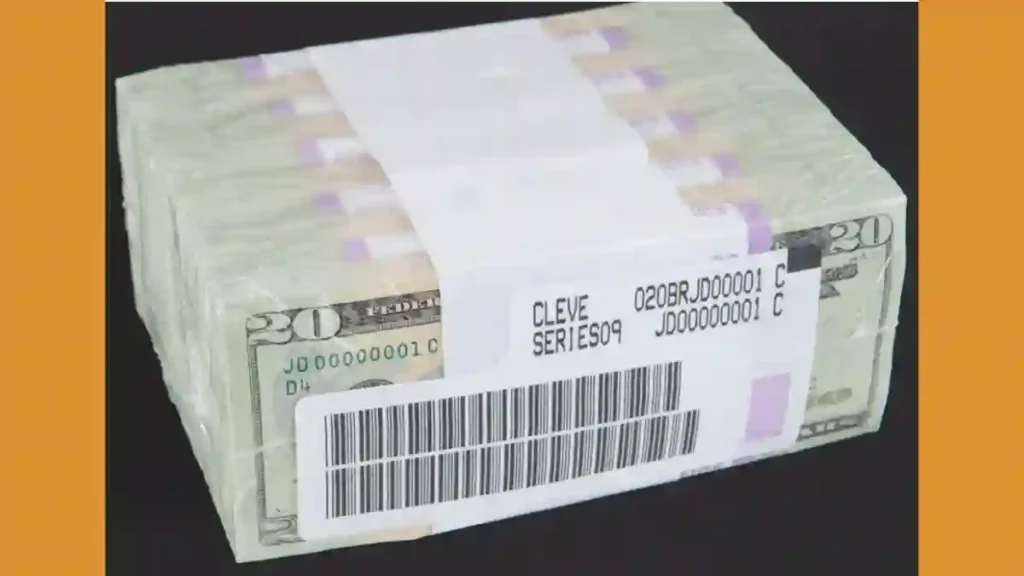
You can see there, if you look closely, the serial number at the top left hand side of the bill is serial number one.
That means that this brick has all of the serial numbers from one all the way to a th00and, which is highly, highly soughta. You’ve got serial number one, two, three, all the way up.
And yeah, not much else to say about this, but someone saw this brick and they said, “Hey, I’m going to invest in this brick and I’m going to spend $20,000.”
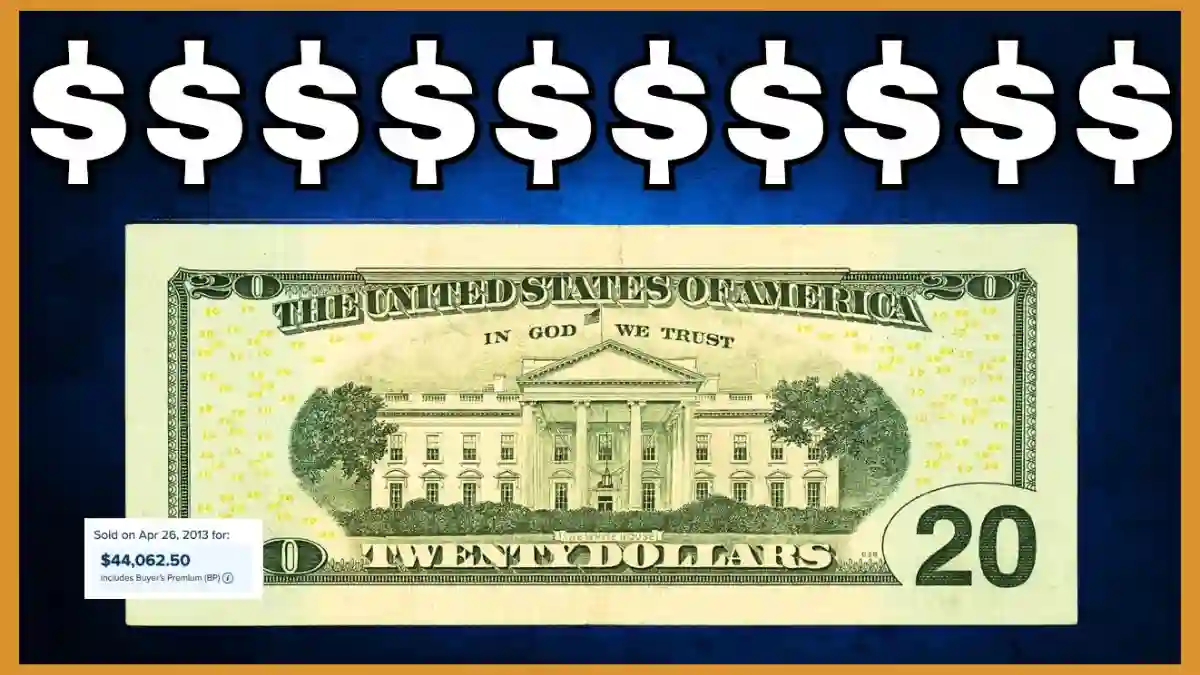
And guess what? It paid off because in 2013, they sold this brick for $44,62.50.

Now, they essentially just doubled their money, which is a huge return on their investment there. This is the sort of flex collectible item that someone extremely wealthy would want to have in their collection. You know, they’ve got a whole brick of these $20 bills. Most people have never seen a brick of notes in their entire life, let alone a brick that starts with the serial number one.
This is the sort of bill that people in the bank industry see and they say, “Guys, look what we have here. What can we do with this sort of item here?”
Now, if you want to get into the details of it, is it really against the law if someone was to deposit $20,000 and pay for this brick? That means that there is no gain or no loss for the actual bank.
That’s kind of up to someone’s own discretion. You know, you got to ask yourself, how did someone get their hands on this brick? Was it pure luck?
It’s hard to believe that a bank teller wouldn’t see this and be like, “Hey, this is pretty cool. This is pretty unique. What can we do with this?”
Either way, someone ended up getting their hands on it. It sold in Heritage Auctions for $44,62.50.
Guys, we hope you enjoy this article.